
The Roads and Dams Near Your Home Can’t Do Without This "Cloth"
2/15/20253 min read
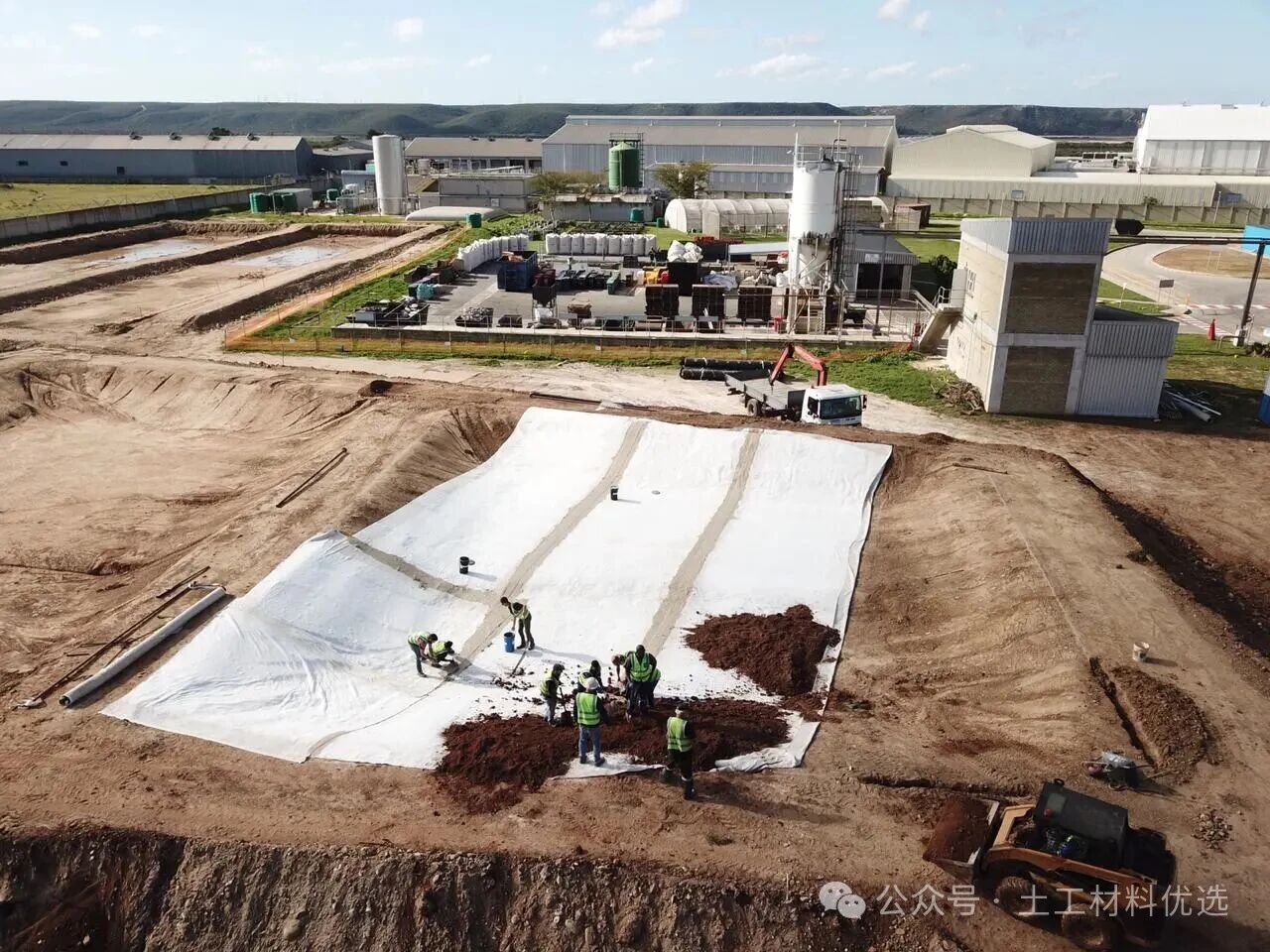
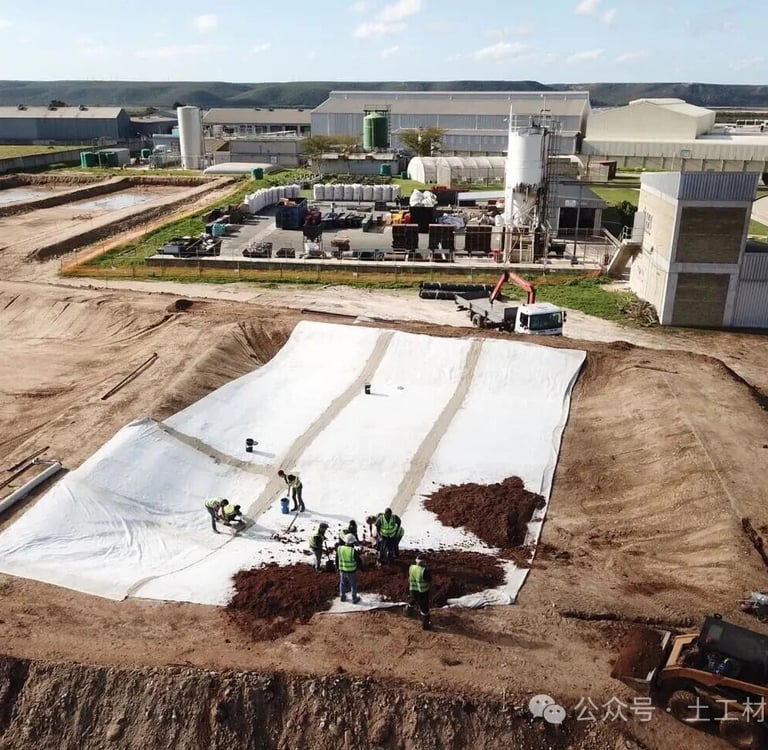
🚧 The road under your feet and the dam behind you may all be supported by this piece of "cloth" 🚧
Hello everyone, today we are going to introduce an "unsung hero" in the engineering field — geotextile.
It won’t be seen by you, but it silently guards highways, railways, reservoirs, landfills... Without it, many projects might have collapsed, leaked, or been damaged long ago.
So, what exactly is geotextile? What amazing abilities does it have? How to choose it without stepping on pitfalls?
After reading this article, you will fully understand👇
I. Geotextile = "Magic Cloth" for Engineering
Geotextile is a permeable fabric material made of synthetic fibers such as polyester (PET) and polypropylene (PP) through needle punching, weaving or thermal bonding processes.
It looks like felt or thick cloth, but its capabilities are far beyond ordinary cloth — it can not only separate different soil layers, but also allow water to pass through smoothly, while reinforcing the soil and protecting the environment.
In a word: It is the "multi-functional skin" of soil engineering.
II. Three Main Types, Each with Its Own Strengths
Type
Simply Put
Best at
Needle-Punched Non-Woven Geotextile
Like thick felt, good water permeability
Drainage, filtration, isolation
Woven Geotextile
Like woven bags, high strength
Reinforcement, tensile resistance, stiffening
Composite Geotextile (e.g., two-cloth-one-membrane)
Combination of cloth + membrane
Anti-seepage, environmental protection projects
💡 Tip: Choose composite type for anti-seepage projects; choose non-woven or woven type for drainage and reinforcement.
III. The "Four Core Abilities" of Geotextile
1️⃣ Isolation — Prevent Different Materials from "Mixing Together"
Prevent soft soil from mixing with gravel, and sand layers from mixing with subgrades, avoiding road subsidence and structural damage.
👉 Example: Lay a layer under the highway subgrade, and gravel will not sink into the soft soil.
2️⃣ Filtration (Reverse Filtration) — Let Water Pass, Keep Soil
Water can pass smoothly, but soil particles are firmly blocked.
👉 Example: Lay geotextile behind the slope protection, rainwater is drained, but soil will not be lost.
3️⃣ Drainage — Build an "Underground River" for Soil
Geotextile itself can conduct water and quickly drain excess water.
👉 Example: Behind retaining walls, drainage layers under sports fields.
4️⃣ Reinforcement and Protection — Enhance Soil Like Steel Bars
Bear tensile force for the soil, improve the overall stability of the soil, and prevent uneven settlement.
👉 Example: Pave geotextile on soft soil foundations, even heavy vehicles will not damage them.
IV. Where Is It Used? (More Common Than You Think)
✅ Highways & Railways: Subgrade reinforcement, anti-reflective cracking, drainage and isolation
✅ Water Conservancy Projects: River embankment slope protection, reservoir anti-seepage, channel lining
✅ Environmental Protection Projects: Anti-seepage layers of landfills, sewage treatment coverage
✅ Construction Projects: Basement waterproof protection, roof greening drainage layers
✅ Ecological Slope Protection: Grass planting slope protection, mine reclamation
It can be said that wherever "stability, reinforcement, permeability and protection" are needed, geotextile is there.
V. Why Do People Choose It? 5 Hardcore Advantages
Corrosion Resistance: Resistant to acids, alkalis and microorganisms, service life up to 50 years or more
Lightweight and Easy to Construct: Can be laid manually, high efficiency and low cost
Permeable but Impermeable to Soil: Protect precious soil resources
High Strength: Especially woven cloth, with excellent tensile performance
Versatile: Can be used with HDPE membranes, geogrids, etc., with an effect of 1+1>2
VI. How to Choose the Right Geotextile? Remember These 3 Steps
❌ Don’t just look at the price; choosing the wrong model is equivalent to laying it in vain.
Step 1: Clarify Your Needs
→ Mainly for anti-seepage? Choose composite geotextile (cloth + membrane)
→ Mainly for drainage and filtration? Choose needle-punched non-woven fabric
→ Need high tensile strength? Choose woven cloth
Step 2: Check Indicators
Tensile strength, bursting strength, permeability coefficient, mass per unit area (g/m²)
Refer to national standards: GB/T 17638, GB/T 17639, GB/T 17640
Step 3: Ask the Manufacturer for Test Reports + On-Site Samples
Regular manufacturers will provide them; don’t buy inferior cloth made of "recycled materials" for cheap.
VII. Common Questions Q&A
Q1: Is geotextile the same as anti-seepage membrane?
No. Geotextile is permeable, while anti-seepage membranes (such as HDPE membranes) are impermeable. The two are often used together — the membrane is responsible for anti-seepage, and the cloth is responsible for protecting the membrane from being punctured.
Q2: Can it be used for home decoration?
Yes. For example, the drainage layer of balcony flower ponds, the isolation layer of roof greening, and the protection outside the basement wall can all use it.
Q3: Will geotextile rot quickly?
No. High-quality polyester or polypropylene geotextile is anti-aging and corrosion-resistant, with a service life of more than 50 years in normal environments.
Contact
Reach out for inquiries or support
Phone
Will@longxingeosyn.com
+86 18663453889【WhatsApp】
© 2025. All rights reserved.
ADD No. 8, Canglongquan Street, Laicheng District, Laiwu City, Shandong Province, China
+86 18663461858【WhatsApp】
+86 18663463618【WhatsApp】
longxin@longxingeosyn.com
info@longxingeosyn.com