
"Protective Guard" for Landfills - Long-Filament Geotextile
9/18/20252 min read
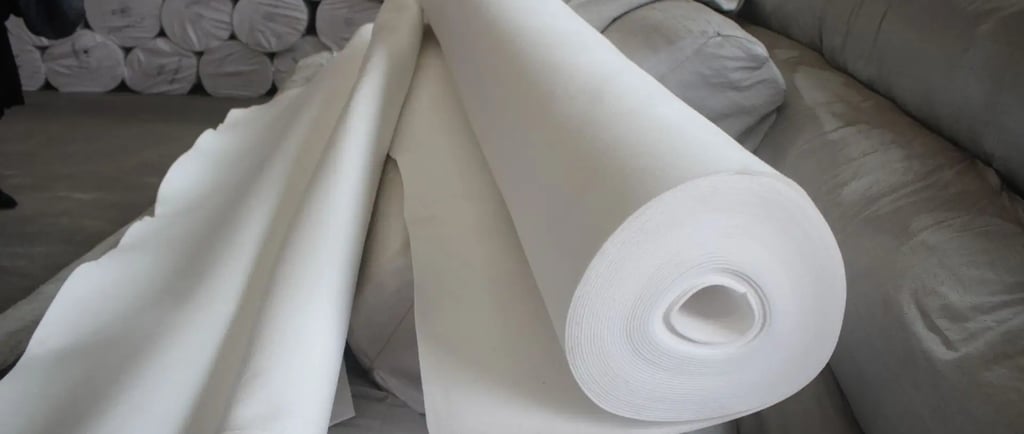
In the urban solid waste disposal system, landfills play a crucial role. Anti-seepage, anti-pollution, and structural stability are the core requirements for landfill construction. With its excellent performance, long-filament geotextile has become an indispensable "protective guard" in landfill projects, building a solid line of defense for the safe operation and ecological protection of landfills.
As a key supporting material for the anti-seepage system of landfills, the core role of long-filament geotextile is reflected in many aspects. It can closely cooperate with HDPE geomembrane to form a composite anti-seepage structure of "geotextile - geomembrane - geotextile", covering both sides of the geomembrane. It effectively buffers the impact of garbage piles and gravel, resists puncture by sharp objects, fundamentally protects the integrity of the anti-seepage layer, and greatly extends its service life. At the same time, its precisely designed pores of 0.5-1.0mm can achieve efficient filtration, intercepting more than 90% of fine particles, preventing solid particles from entering the leachate drainage system and causing pipeline blockage. In addition, with a vertical permeability coefficient of 10⁻³ cm/s, it can quickly discharge landfill gas and leachate, avoiding potential safety hazards and anti-seepage layer erosion caused by gas accumulation and liquid stagnation.
The complex environment of landfills puts strict requirements on material performance, and the characteristics of long-filament geotextile are perfectly adapted. It is resistant to acid and alkali corrosion, can withstand extreme environments with pH 2-13, and easily resists the chemical erosion of leachate. It has outstanding UV resistance, with a strength retention rate of more than 85% after 2000 hours of irradiation, adapting to the long-term exposure of open-air landfills. Its physical strength is also up to standard: the commonly used specification of 600g/㎡ can meet the mechanical strength and durability requirements of the landfill cover system, and indicators such as bursting strength and tearing strength all comply with the national urban construction industry standard GB/T17639-2025. Long-filament geotextile also has the advantages of low density, low friction coefficient, and good hydrophobicity. Under the same strength, it has a larger coverage area, is wear-resistant and anti-vibration, and has full stability in long-term use in landfills.
From the perspective of practical application, long-filament geotextile has strong adaptability. It can be seen in the anti-seepage and drainage of the landfill bottom and slopes, as well as the ecological restoration after landfill closure. When laid on slopes, its reinforcement effect can stabilize steep soft foundations and prevent soil erosion. After the final closure and coverage of the landfill, its three-dimensional pore structure can also promote the development of vegetation roots, help with closure greening, and realize the combination of ecological restoration and site utilization. In the construction and acceptance links, there are clear industry standards for long-filament geotextile. From material yard storage, transportation protection, to joint treatment of fusion welding, and on-site testing of tensile strength and permeability coefficient, the standardized process ensures its engineering application effect.
Contact
Reach out for inquiries or support
Phone
Will@longxingeosyn.com
+86 18663453889【WhatsApp】
© 2025. All rights reserved.
ADD No. 8, Canglongquan Street, Laicheng District, Laiwu City, Shandong Province, China
+86 18663461858【WhatsApp】
+86 18663463618【WhatsApp】
longxin@longxingeosyn.com
info@longxingeosyn.com