
Geotextile: Material, Roll Size & Price Per Square Meter
8/18/20253 min read
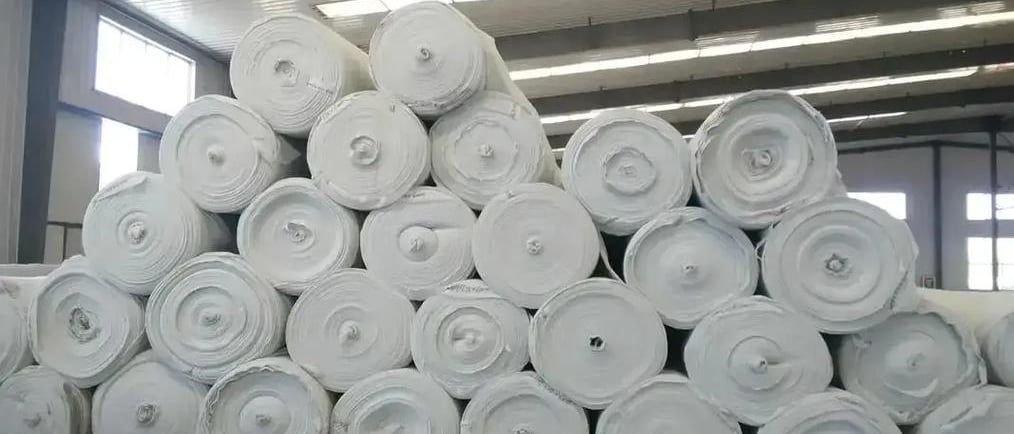
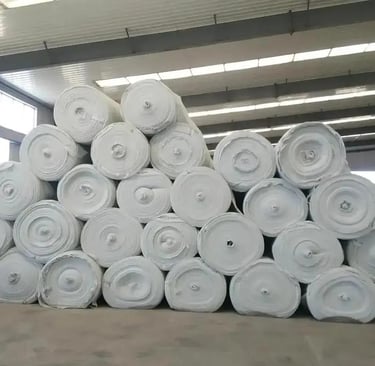
As a geotextile manufacturer with more than 10 years of experience, we’ve seen many customers fall into pitfalls when purchasing geotextiles. They spend a lot of money, but due to a lack of understanding of the material composition, roll coverage area, and reasonable price per square meter, they fail to make rational purchasing decisions—leading to waste, cost overruns, or failure to meet project requirements.
In fact, choosing geotextiles for procurement is not that complicated. The key is to clarify the core information such as material, roll size and price, and match them with your own project needs. The core of geotextile procurement lies in understanding its basic parameters, which can help you avoid unnecessary losses.
Today, we will focus on the three core questions that every buyer cares about: what material is geotextile made of, how many square meters are in a roll, and how much does it cost per square meter?
1. What Material is Geotextile Made Of?
Geotextile is a commonly used category of geosynthetic materials, mainly processed with synthetic fibers as the core raw material. Most geotextiles commonly used in the market are made of polyester (PET) fibers or polypropylene (PP) fibers.
Geotextile made of polyester fibers has more stable performance. It can maintain good durability in complex outdoor environments, with excellent corrosion resistance and anti-aging properties, making it suitable for long-term projects such as road maintenance and water conservancy reinforcement.
Geotextile made of polypropylene fibers is lighter in weight and relatively lower in processing cost, making on-site laying and construction more time-saving and labor-saving. It is suitable for temporary ground protection such as temporary enclosures and short-term use scenarios.
2. How Many Square Meters Are in a Roll of Geotextile?
There is no unified standard for the roll size of geotextile. Different manufacturers will adjust the production specifications according to the actual market demand.
The conventional width of geotextile ranges from 1 meter to 6 meters, and the roll length is mostly 50 meters to 100 meters.
The number of square meters per roll of geotextile can be calculated simply:
Width × Roll Length = Exact Area
For a conventional model with a width of 2 meters and a roll length of 50 meters, the coverage area of one roll is 100 square meters. For large-specification products with a width of 6 meters and a roll length of 100 meters, one roll can reach 600 square meters. Choosing large-specification rolls for large-scale construction projects can reduce the number of splices and greatly improve construction efficiency.
For small-scale projects, it is better to choose small-specification rolls to control costs. Before procurement, accurately measure the total construction area and plan the quantity according to the normal loss during on-site construction, so as to avoid waste caused by incorrect specification selection or construction progress delays due to insufficient materials.
3. Factors Affecting the Price Per Square Meter of Geotextile
Generally, the price of geotextile is in a floating state, and there is no fixed price per square meter. The main factors affecting the price are thickness and product specifications.
Thicker geotextiles have high fiber density, good tensile and compressive properties, and the production cost increases, so the price will also rise.
The raw material cost of polyester is higher than that of polypropylene. Under the same thickness, the price of polyester geotextile will be slightly higher. In addition, the market supply of raw materials will also cause fluctuations in the market price, but the fluctuations are generally not large.
Do not blindly pursue low-price products when purchasing. Low-price popular geotextiles are easy to break and age, and cannot achieve the expected effect if used for a long time.
Only by comprehensively evaluating the required thickness and project needs can you choose geotextile with reasonable price and good quality.
Purchase Reminder
There are many manufacturers on the market that cut corners on raw materials or falsely mark specifications to reduce costs and attract customers. When purchasing geotextiles, please keep your eyes open and preferably ask for a test report to confirm the material, thickness and other parameters of the product, so as to ensure that the purchased products meet the project requirements.
Conclusion
That’s all about the material, roll size and price of geotextiles. We hope this article will help you make rational purchasing decisions. If you have any questions about geotextile procurement for specific projects, feel free to contact us—we will provide professional suggestions based on our 10-year production experience.
Contact
Reach out for inquiries or support
Phone
Will@longxingeosyn.com
+86 18663453889【WhatsApp】
© 2025. All rights reserved.
ADD No. 8, Canglongquan Street, Laicheng District, Laiwu City, Shandong Province, China
+86 18663461858【WhatsApp】
+86 18663463618【WhatsApp】
longxin@longxingeosyn.com
info@longxingeosyn.com