
Everything You Need to Know About Geomembranes: Your Go-To for Anti-Seepage and Soil Protection
3/13/20255 min read
Everything You Need to Know About Geomembranes: Your Go-To for Anti-Seepage and Soil Protection
Beside the dikes of water conservancy projects, at the bottom of landfills, under the pools of aquaculture farms, and even beneath the artificial lakes of urban landscapes, there lies an seemingly ordinary yet crucial "protective membrane" — geomembrane.
Unlike the eye-catching steel bars and cement, it silently guards every inch of land and every drop of water with its super strong anti-seepage capacity and tough durability, becoming an indispensable "invisible guardian" in modern engineering. Today, we will take you to fully unlock the secrets of geomembranes, and figure out what it is, what it can do, and how to choose it!
I. First Introduction to Geomembranes: More Than Just "Plastic Cloth", It’s a High-Tech Anti-Seepage Material
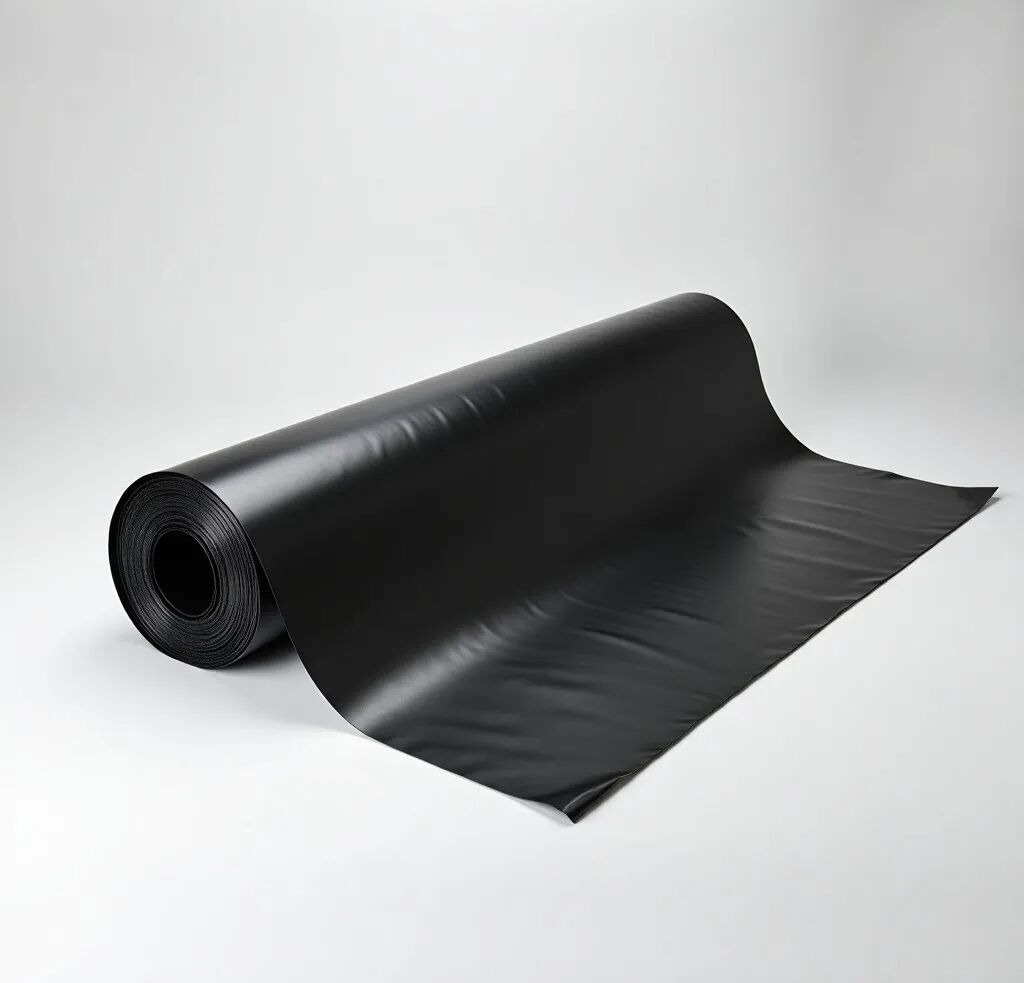
Many people, when seeing geomembranes, mistakenly think they are just ordinary "plastic cloth", but this is not the case. Geomembranes are waterproof and barrier materials made of high molecular polymers (such as HDPE, LDPE, EVA, etc.) as the core raw materials, added with anti-aging, anti-ultraviolet, anti-corrosion and other additives, and manufactured through special processes. Some are also compounded with non-woven fabrics to further improve performance.
Although it is thin, its core strength should not be underestimated. These key advantages determine its "core position" in engineering:
Watertight Anti-seepage Capacity: The permeability coefficient can be as low as 10⁻¹²~10⁻¹³ cm/s. Ordinary water can hardly penetrate under pressure, which is several times better than the anti-seepage effect of traditional concrete and clay, truly achieving "zero leakage" guarantee.
Durable and Wear-Resistant: It can withstand acid-base environments with pH 2-13, resist corrosion from landfill leachate and industrial wastewater. After adding UV stabilizers, even under outdoor exposure, wind and rain, its service life can reach 30~50 years, and even longer in concealed application scenarios.
Flexible Adaptability: It has strong extensibility and high deformation adaptability, which can perfectly fit complex terrain. Even if the foundation has slight uneven settlement, it will not crack or be damaged, making it more suitable for various engineering scenarios than rigid anti-seepage materials.
Efficient and Economical Practicality: It is light in weight, convenient for transportation, simple and fast for construction. Dozens of workers can lay tens of thousands of square meters a day. The cost is much lower than that of concrete and clay anti-seepage schemes, especially suitable for large-area projects, which can greatly shorten the construction period and reduce costs.
Green and Environmentally Friendly Safety: It is non-toxic and tasteless, adopts the principle of physical barrier, does not add harmful chemical agents, and will not pollute soil and water. It is suitable for high-standard scenarios such as drinking water pools, ecological landscapes and aquaculture.
II. Common Types of Geomembranes: Choose on Demand to Precisely Adapt to Different Scenarios
There are many types of geomembranes. According to material, structure and function, they can be divided into various types. The applicable scenarios of different types vary greatly. Only by choosing the right one can the best effect be achieved. These mainstream types must be distinguished clearly:
1. Classification by Material (Core Distinction)
HDPE Geomembrane (High-Density Polyethylene): The most widely used type, with extremely strong anti-seepage, anti-corrosion and anti-puncture capabilities, non-toxic and tasteless. It is suitable for scenarios with high anti-seepage requirements and corrosion risks such as landfills, sewage treatment plants, tailings ponds and chemical pools. It is also the first choice for aquaculture and water conservancy projects.
LDPE Geomembrane (Low-Density Polyethylene): It has better flexibility and extensibility, and can adapt to large terrain deformation. It is suitable for scenarios with soft foundations and complex terrain, such as small water storage tanks, landscape rivers and temporary anti-seepage projects, but its strength and anti-corrosion performance are slightly inferior to HDPE geomembrane.
EVA Geomembrane (Ethylene-Vinyl Acetate Copolymer): It has outstanding flexibility and excellent low-temperature resistance, suitable for cold areas and scenarios requiring frequent deformation. It also has moisture-proof and sound insulation performance, and can be used in environmental protection, water conservancy and other projects with medium and low anti-seepage requirements.
PVC Geomembrane (Polyvinyl Chloride): It has good anti-seepage and durability, strong flexibility, suitable for anti-seepage treatment of construction projects, small water pools, oil storage tanks and other scenarios, with moderate cost performance.
2. Classification by Structural Form (Practical Distinction)
Smooth Geomembrane: With a smooth surface and small water flow resistance, it can improve water transmission efficiency. It is mainly used in anti-seepage projects that need to reduce water flow resistance such as fish ponds, shrimp ponds, reservoirs and canals, among which HDPE smooth geomembrane is the most widely used.
Rough Geomembrane: It is processed by secondary roughening on the basis of smooth geomembrane, with greatly improved friction force, which can effectively prevent sliding. It is specially designed for inclined scenarios such as slopes, dikes and tailings dams, and can better combine with soil to ensure engineering stability.
Composite Geomembrane: Composed of geotextile and geomembrane, forming a "geotextile + membrane + geotextile" sandwich structure. It not only retains the anti-seepage performance of geomembrane, but also enhances the anti-puncture and tensile capacity, which can protect the membrane from damage by sharp objects. It is suitable for complex and high-load scenarios such as landfills, tailings ponds and reservoir dikes. Common specifications include one-cloth-one-membrane and two-cloth-one-membrane.
III. Full-Scenario Applications: From Farmland to Cities, It’s Everywhere
The application scope of geomembranes is far wider than we imagine, covering many fields such as water conservancy, environmental protection, agriculture, municipal administration and mining, penetrating into all aspects of our life. Every application is silently guarding safety and ecology:
✅ Water Conservancy Engineering: Guard Water Resources and Build a Solid Anti-Seepage Line
After laying geomembranes in scenarios such as reservoir basins, river lining, dike anti-seepage and irrigation canals, the loss of water resources due to leakage can be reduced by more than 90%, water transmission efficiency can be improved, and at the same time, dike collapse and foundation settlement can be prevented to guard the safety of water conservancy projects. It is especially suitable for anti-seepage core walls of earth-rock dams, dam foundation blankets, and repair and reinforcement of old dikes.
✅ Environmental Protection Engineering: Isolate Pollution and Keep the Ecological Bottom Line
This is one of the most critical application fields of geomembranes. The bottom and closure coverage of landfills, hazardous waste disposal sites, tailings ponds and regulation pools of sewage treatment plants all need geomembranes as the core anti-seepage layer to block the penetration of landfill leachate, heavy metal wastewater and harmful liquids, protect soil and groundwater from pollution, and it is a "mandatory standard configuration" for environmental protection projects.
✅ Agricultural Aquaculture: Save Water and Increase Efficiency, Help Improve Quality and Income
After laying geomembranes in scenarios such as fish ponds, shrimp ponds, biogas digesters and irrigation reservoirs, the problem of water leakage can be completely solved, the cost of water change and replenishment can be reduced, and at the same time, water quality can be cleaned, the occurrence of diseases can be reduced, the breeding density can be increased, and it can help ecological breeding improve quality and income. In addition, it can prevent soil salinization and protect cultivated land resources.
✅ Municipal Gardening: Create Landscapes and Protect Water, Balancing Aesthetics and Practicality
In scenarios such as urban artificial lakes, wetland parks, roof gardens and subway tunnels, geomembranes can effectively prevent water loss and leakage of underground projects, balance ecological landscape and structural safety, keep urban water scenes beautiful for a long time, and reduce later maintenance costs.
✅ Mining and Industry: Corrosion-Resistant and Anti-Seepage, Ensure Safe Production
Laying geomembranes in mining heap leaching fields (such as gold and copper mines) can collect valuable mineral solutions and prevent the spread of heavy metal pollution; in scenarios such as chemical pools, oil storage tanks, salt pans and evaporation pools, geomembranes can resist corrosion by strong acids and alkalis, eliminate the risk of liquid leakage, and ensure production safety and environmental safety.
Contact
Reach out for inquiries or support
Phone
Will@longxingeosyn.com
+86 18663453889【WhatsApp】
© 2025. All rights reserved.
ADD No. 8, Canglongquan Street, Laicheng District, Laiwu City, Shandong Province, China
+86 18663461858【WhatsApp】
+86 18663463618【WhatsApp】
longxin@longxingeosyn.com
info@longxingeosyn.com