
Easy to Understand for Beginners: What Exactly Are Geosynthetics?
4/19/20252 min read
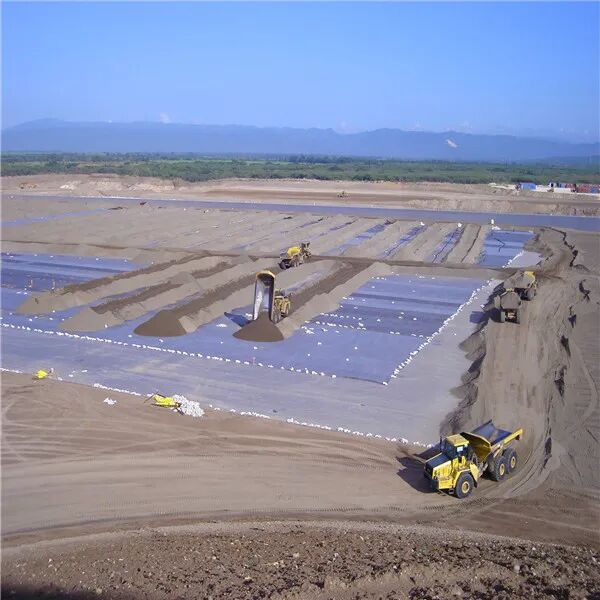
When many people hear the term "geosynthetics" for the first time, they think it’s some extremely profound and incomprehensible professional stuff.
In fact, it’s very simple. It’s an engineering material used to "dress, patch, and waterproof" soil, subgrades, dikes, and slopes. It’s specifically designed to make projects stronger, leak-proof, and landslide-proof.
This article uses plain language to explain geosynthetics from scratch—even laymen can understand it after reading.
I. First, Understand: What Exactly Are Geosynthetics?
Simply put: Any synthetic material used in soil, subgrades, dikes, landfills, and riverbanks to reinforce, waterproof, drain, and prevent soil erosion is called geosynthetics.
It’s not steel bars or cement; most are made of plastic or chemical fibers. They are light, soft, tensile, and corrosion-resistant, and can be buried in soil for decades without easily deteriorating.
One-sentence summary: If the soil is too soft, loose, prone to water leakage, or collapse, geosynthetics are here to solve these problems.
II. The Most Common Types of Geosynthetics, Easy to Understand at a Glance
1. Geotextile — Like a "Thick Towel for Engineering"
It looks like cloth, breathable and permeable, but soil particles can’t pass through.
Function: Filtration, soil retention, protection, and separation.
Where to use: Under subgrades when building roads, river slope protection, and on top of landfills.
2. Geomembrane — Like a "Super Waterproof Plastic Wrap"
A layer of plastic film that is almost impermeable to water.
Function: Anti-seepage, leak-proof, and pollution prevention.
Where to use: Landfills, reservoirs, fish ponds, tailings ponds, and artificial lakes.
3. Geogrid — Like a "Plastic Grid"
A grid with strong tensile strength.
Function: Reinforce soil, stabilize subgrades, and prevent settlement and cracking.
Where to use: Highway and railway subgrades, soft soil foundations, and slope reinforcement.
4. Geocell — Like a "Honeycomb-shaped Box"
It unfolds into a honeycomb shape; filling it with soil turns it into a single unit.
Function: Fix soil, prevent scouring, and protect slopes.
Where to use: Mountain slope protection, subgrade slopes, and riverbank protection.
5. Composite Geomembrane — Geotextile + Geomembrane
One side is cloth, the other is film; it is both waterproof and wear-resistant.
Function: Dual-purpose of anti-seepage and protection.
Where to use: Reservoirs, canals, and water storage tanks.
III. What Exactly Do Geosynthetics Do in Engineering?
Unstable subgrade? → Lay geogrids to keep the road from settling or cracking.
Leaking reservoir or fish pond? → Lay geomembrane for complete water tightness.
Soil easily washed away by rain? → Lay geotextile or geocell to fix the soil.
Landfill leachate polluting groundwater? → Use multiple layers of geomembrane + geotextile for complete isolation.
Soft subgrade collapsing when pressed? → Use drainage boards + geotextile to quickly drain water and harden the soil.
To put it simply:
Geotextile = Filtration + Protection
Geomembrane = Waterproofing + Anti-seepage
Geogrid = Reinforcement + Tensile Strength
Geocell = Soil Fixation + Slope Protection
IV. How Can Ordinary People Quickly Distinguish Good from Bad?
You don’t need to understand complex indicators—just remember these three points:
Thicker and heavier ones are generally more durable (for the same type).
Good products have strong tensile strength and are not easy to tear.
For engineering use, they must have test reports—don’t buy unbranded products (three-no products).
Contact
Reach out for inquiries or support
Phone
Will@longxingeosyn.com
+86 18663453889【WhatsApp】
© 2025. All rights reserved.
ADD No. 8, Canglongquan Street, Laicheng District, Laiwu City, Shandong Province, China
+86 18663461858【WhatsApp】
+86 18663463618【WhatsApp】
longxin@longxingeosyn.com
info@longxingeosyn.com