
Carbon Black Content Testing of Geosynthetic Geomembranes: A Key Link in Controlling Anti-Seepage Quality
5/26/20253 min read
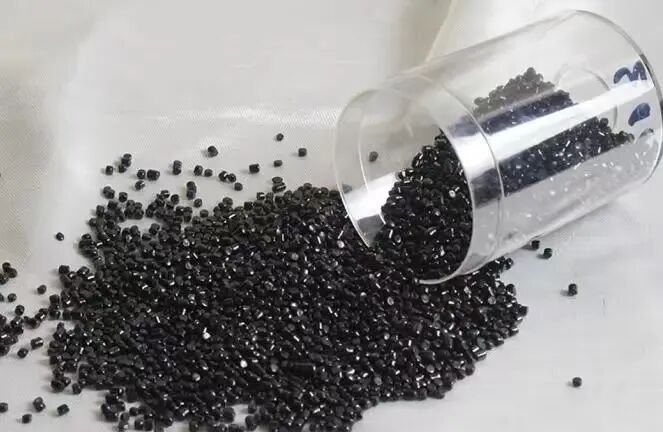
In major projects such as landfill, water conservancy anti-seepage, and environmental pollution control, geomembranes are the core materials to hold the bottom line of anti-seepage. However, most people only pay attention to thickness and strength, but ignore the key factor that determines their anti-aging service life — carbon black content. This seemingly insignificant index is directly related to whether the geomembrane will age and crack in advance, and whether the project will have potential leakage hazards. Today, we will explain the core points of geomembrane carbon black content testing in one article.
Carbon black can be called the "anti-aging guardian" of polyethylene geomembranes. Pure polyethylene materials exposed outdoors for a long time will be quickly eroded by ultraviolet rays and oxygen, leading to embrittlement and cracking of the membrane, completely losing anti-seepage capacity. Carbon black can effectively block ultraviolet rays, delay the degradation of polymer materials, and greatly extend the service life of geomembranes. According to the national standard GB/T 17643-2025, the carbon black content of qualified black polyethylene geomembranes must be strictly controlled in the range of 2% - 2.8%: too low content results in insufficient anti-aging performance, leading to premature aging and failure in a short period; too high content will damage the flexibility and tensile strength of the geomembrane, making the material brittle and easy to crack, which also fails to meet the standards.
At present, the carbon black content testing of geomembranes uniformly follows the national standard GB/T 13021-2023, and the industry mainly adopts two precise testing methods: Thermogravimetric Analysis (TGA) and Tube Furnace Calcination Method. Thermogravimetric Analysis relies on professional instruments to heat samples in an inert gas atmosphere, separate the volatile polyethylene matrix from the residual carbon black, and quickly calculate the content through mass difference. It has high accuracy and efficiency, making it the first choice for laboratories. The Tube Furnace Calcination Method adopts two steps: pyrolysis under nitrogen protection and calcination in air. It has stable data and authoritative results, suitable for testing various geomembrane samples. The whole process strictly follows the specifications to ensure no deviation in data.
The complete testing process is rigorous and detailed. The first step is to randomly select representative samples, cut them, remove impurities, dry them to constant weight, and accurately record the original mass. Then, carry out high-temperature pyrolysis and calcination according to the standard-set temperature and gas parameters to completely separate the carbon black. After the samples cool down, weigh them again, calculate the content through professional formulas, and finally judge whether they are qualified by comparing with the national standard and issue a formal test report. Every step controls the details to eliminate testing errors.
Never underestimate the hazards of unqualified carbon black content. Some inferior manufacturers in the market deliberately reduce the amount of carbon black added to cut costs. The low-cost geomembranes produced seem to save money, but in fact, they bury huge hidden dangers. After such geomembranes are put into use, they will age, crack and leak in a short time, causing landfill leachate to pollute soil and water, and leading to failure of anti-seepage in water conservancy projects. It will not only cost a huge amount of money for rework and maintenance, but also violate environmental protection laws and regulations, affecting project acceptance and subsequent operation.
Whether it is the acceptance of raw materials before project entry or the quality self-inspection of production enterprises, carbon black content testing is an indispensable link. It can screen out inferior products from the source, ensure that geomembranes have qualified anti-aging performance, extend the overall service life of the project, reduce later maintenance costs, and at the same time meet national engineering quality and environmental protection standards, completely avoiding the risks of leakage and rework.
Engineering quality is no trivial matter, and detail control is the key. Don’t let the small index of carbon black content become a short board in project anti-seepage. Doing professional testing can build a solid barrier for project safety.
Contact
Reach out for inquiries or support
Phone
Will@longxingeosyn.com
+86 18663453889【WhatsApp】
© 2025. All rights reserved.
ADD No. 8, Canglongquan Street, Laicheng District, Laiwu City, Shandong Province, China
+86 18663461858【WhatsApp】
+86 18663463618【WhatsApp】
longxin@longxingeosyn.com
info@longxingeosyn.com