
A Complete Guide to Short-Filament Geotextile: Understand It in 6 Dimensions, Avoid Pitfalls in Engineering Selection
5/8/20245 min read
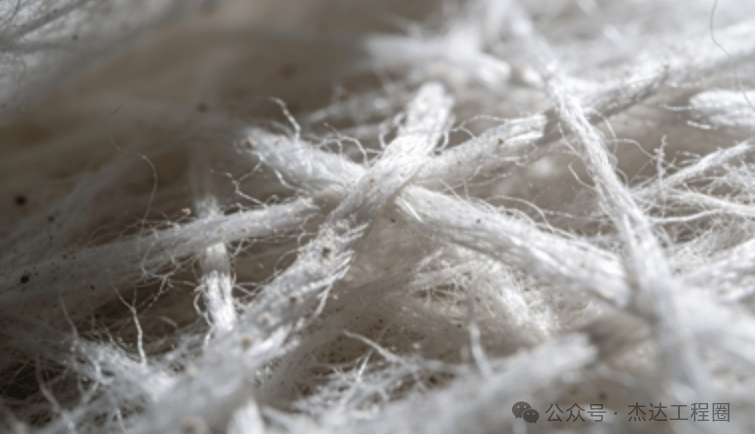
In the family of geosynthetic materials, short-filament geotextile has become a "regular" in various projects such as water conservancy, highways, and environmental protection due to its excellent cost-performance ratio and wide applicability. But do you really understand it? What is the core difference between it and long-filament geotextile? How to choose it accurately in specific projects? Today, we will thoroughly explain short-filament geotextile from 6 core dimensions in one article, helping you easily solve the problem of engineering selection!
【Basic Concept】What is Short-Filament Geotextile?
Short-filament geotextile is a geosynthetic material made of polyester (PET) or polypropylene (PP) as the core raw material, through processes such as short fiber carding and needle punching reinforcement. Its fiber length is usually between 50~150mm, arranged randomly and irregularly to form a dense three-dimensional network structure, which is the source of its core performance.
Compared with long-filament geotextile (directly spun from continuous filaments into cloth), short-filament geotextile has a simpler production process and more advantageous cost. However, under the same grammage, its mechanical strength is slightly lower than that of long-filament products. Nevertheless, it is this unique structure of "short fibers" that endows it with performance highlights that long-filament geotextile cannot replace, adapting to more low-to-medium stress engineering scenarios.
【Performance Characteristics】Advantages and Disadvantages at a Glance for Clear Selection
Core Advantages:
✅ Excellent filtration performance: The three-dimensional network pore structure can efficiently intercept soil particles, prevent soil loss, and ensure smooth water penetration, with stable and reliable reverse filtration effect, suitable for various drainage and reverse filtration scenarios.
✅ Outstanding isotropy: Fibers are arranged randomly and evenly, making the mechanical properties of the cloth in the longitudinal and transverse directions very small, with uniform force bearing, avoiding damage caused by local stress concentration.
✅ Strong construction adaptability: Soft hand feel and good toughness, easy to wrap and cover various irregular slopes or foundation surfaces, convenient construction, and reducing construction difficulty.
✅ High cost-performance ratio: Compared with long-filament geotextile, short-filament products have lower production costs, which can effectively control project budget on the premise of meeting basic engineering needs.
Potential Disadvantages:
❌ Limited tensile strength: Under the same grammage, its tensile strength is about 70%~80% of that of long-filament geotextile, which is not suitable for high-stress, strong reinforcement projects (such as high-grade highway subgrade reinforcement).
❌ Weak UV resistance: It is easy to age when exposed to outdoor sunlight for a long time. If long-term exposure is required, products with UV-resistant additives or protective layers should be selected.
【Application Scenarios】In Which Projects Can It Play a Role?
The core functions of short-filament geotextile are isolation, filtration, drainage, and protection, with a wide range of application scenarios, covering almost all types of infrastructure projects:
Water conservancy projects: Paving of river slope protection and dam reverse filtration layers, effectively preventing soil erosion, and discharging groundwater inside the dam to ensure dam stability.
Highway/railway projects: Isolation layer between subgrade and soft soil layer, avoiding mixing of two media, reducing subgrade settlement, and enhancing foundation bearing stability.
Environmental protection projects: Drainage layers at the bottom and slope of landfills, collecting and discharging leachate to prevent soil and groundwater pollution.
Slope protection projects: Used in combination with geogrids for soil consolidation and water retention during slope greening, contributing to ecological slope protection.
In a word: Short-filament geotextile is a cost-effective choice for all projects that need to achieve the core needs of "soil isolation and drainage, soil conservation and water filtration".
【Specifications and Parameters】How to Read Key Indicators? Avoid Blind Selection
The specification of short-filament geotextile is usually identified by the mass per unit area (g/m²), with a common range of 100~800g/m². The most commonly used models in engineering are 200g, 300g, 400g, and 500g.
In addition to grammage, the following 4 key indicators directly determine its adaptability and should be focused on during selection:
1. Breaking strength (kN/m): Reflects the tensile capacity of geotextile. Generally, the higher the grammage, the greater the breaking strength, which needs to be matched according to the engineering force requirements.
2. CBR burst strength (kN): Simulates the bursting effect of sharp objects such as stones on geotextile in engineering, reflecting its damage resistance.
3. Equivalent aperture (O90, mm): The core indicator determining filtration performance, usually 0.07~0.2mm, which needs to be matched according to the size of soil particles.
4. Vertical permeability coefficient (cm/s): Reflects the water permeability speed, generally in the order of 10⁻¹~10⁻³, which needs to meet the engineering drainage needs.
During selection, it is necessary to accurately match the above parameters according to the engineering design requirements, avoiding cost waste caused by over-selection or engineering quality impact caused by insufficient selection.
【How to Select】3 Steps to Choose the Right Model, Even for Beginners
Taking a river slope protection project (core needs: preventing soil erosion and realizing reverse filtration and drainage) as an example, we will teach you to select quickly:
Step 1: Clarify the core functional needs. If it is mainly used for filtration and reverse filtration, focus on the equivalent aperture and vertical permeability coefficient; if it needs to bear a certain construction load or soil pressure, focus on the breaking strength and CBR burst strength.
Step 2: Determine the grammage range. For the reverse filtration scenario of river slope protection, 200~300g/m² is commonly used; for soft foundation isolation and heavy load scenarios, models above 400g/m² should be selected.
Step 3: Consider cost-performance ratio. On the premise of meeting the design indicators, prioritize short-filament geotextile, which can greatly reduce project costs compared with long-filament products.
Tip: If the geotextile needs to be exposed outdoors for a long time in the project, be sure to inform the manufacturer and select special products with UV-resistant additives to extend the service life.
【Construction and Price】Laying Points + Market Conditions, Avoid Detours
Core Construction Points:
1. During laying, keep it flat and free of wrinkles to avoid damage caused by pulling. The lap width should not be less than 30cm to ensure tight connection.
2. Use sewing or U-shaped nails for fixation. The mechanical strength of the sewing thread should not be lower than that of the geotextile itself to prevent loosening at the joint.
3. Avoid sharp stones and debris piercing the geotextile during laying. If damage is found, cut patches to repair in time to ensure the overall protection effect.
Market Reference:
The price of short-filament geotextile mainly depends on the grammage, raw materials (PET/PP), and whether UV-resistant additives are added. For conventional 100~800g/m² products, the price range is about 1.5~8 yuan/m² (specific prices can be consulted with the manufacturer according to the purchase volume and customized specification requirements).
【Conclusion】
With the core advantages of strong filtration, convenient construction, and high cost-performance ratio, short-filament geotextile plays an indispensable role in various infrastructure projects. Understanding its performance, specifications, and application scenarios can help it exert the maximum value in the project, ensuring both project quality and project cost control. Next time you encounter the problem of geotextile selection, you can refer to this article to solve it easily!
Contact
Reach out for inquiries or support
Phone
Will@longxingeosyn.com
+86 18663453889【WhatsApp】
© 2026. Copyright belongs to Shandong Longxin Geosynthetics Co., Ltd.
No. 8, Canglongquan Street, Laiwu District,Jinan City, Shandong Province, China
+86 18663461858【WhatsApp】
+86 18663463618【WhatsApp】
Longxin@longxingeosyn.com
yara@longxingeosyn.com
ADD